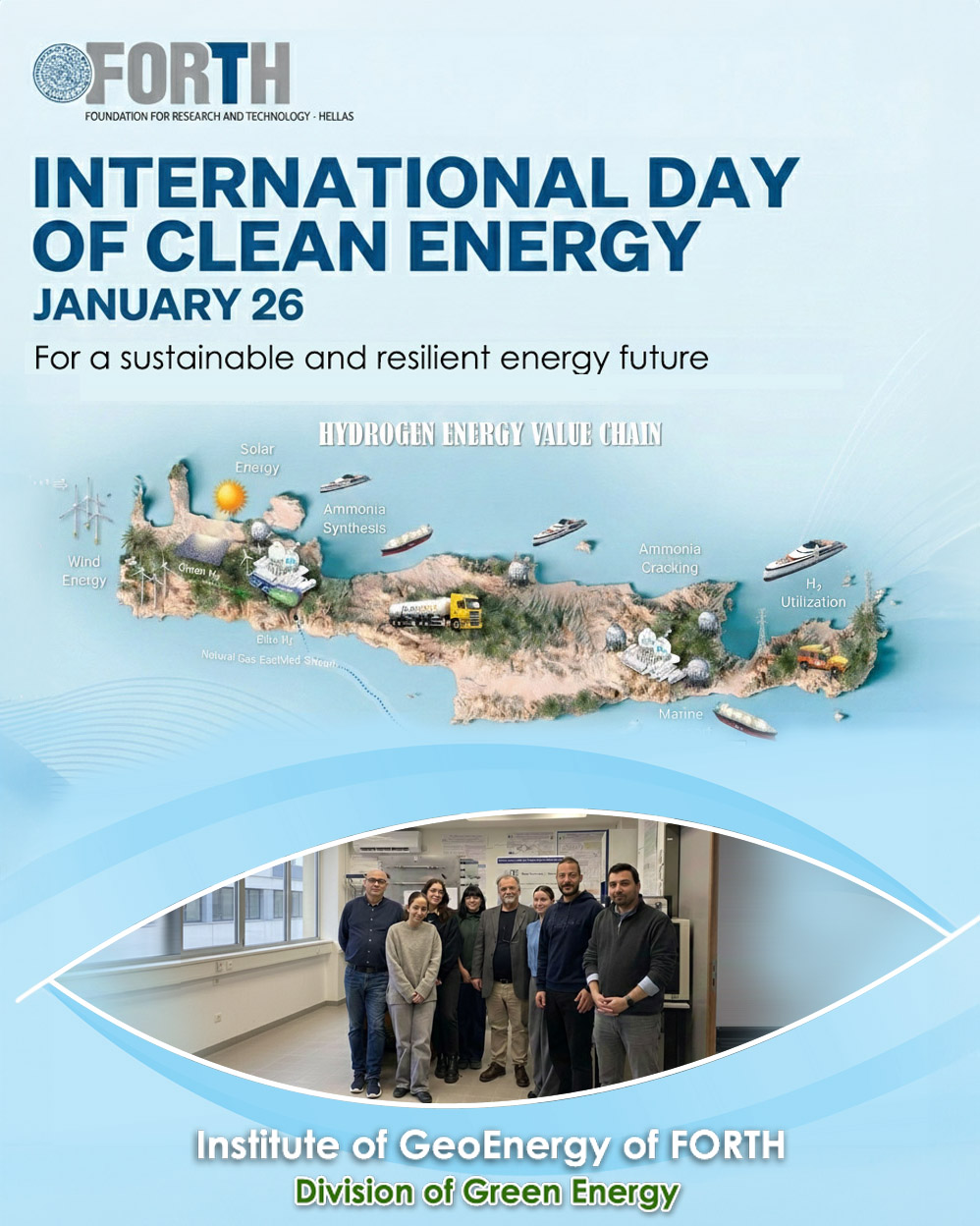




Clean energy is a cornerstone for tackling climate change and enabling a sustainable and resilient energy future. At the Institute of GeoEnergy (IG) of FORTH, research and innovation span the entire energy transition value chain, from geology and novel materials to integrated energy systems.
In this context, hydrogen is recognized as a key energy vector, offering unique opportunities for large-scale energy storage, sector coupling, and deep decarbonization of energy-intensive applications. By enabling the integration of renewable energy sources and supporting flexible, low-carbon energy systems, hydrogen plays a central role in the transition toward climate-neutral energy solutions.
Within the Division of Green Energy Transition Innovation, the Institute focuses on the following hydrogen-related activities:
- Hydrogen production technologies (green, blue, turquoise, and white hydrogen) and their role in the energy transition
- Hydrogen storage technologies, with emphasis on physical and chemical adsorption of hydrogen in advanced materials (nanoporous, nanostructured and functionalized)
- Fuel cell technologies, from materials development to system integration
- Hydrogen safety and sensing, including detection, monitoring and risk mitigation in hydrogen systems
- Subsurface geological storage of hydrogen, including reservoir modeling and development
- Integrated energy systems, where hydrogen acts as a key energy carrier
- Coupling hydrogen with carbon capture and storage/utilization (CCS/CCUS)
- Design, control and optimization of novel energy processes with high technological readiness levels (TRL)
Through interdisciplinary research, experimental development, and strong international collaborations, IG-FORTH actively contributes to the transition toward a low-carbon economy, positioning hydrogen as a central pillar of future clean energy systems.